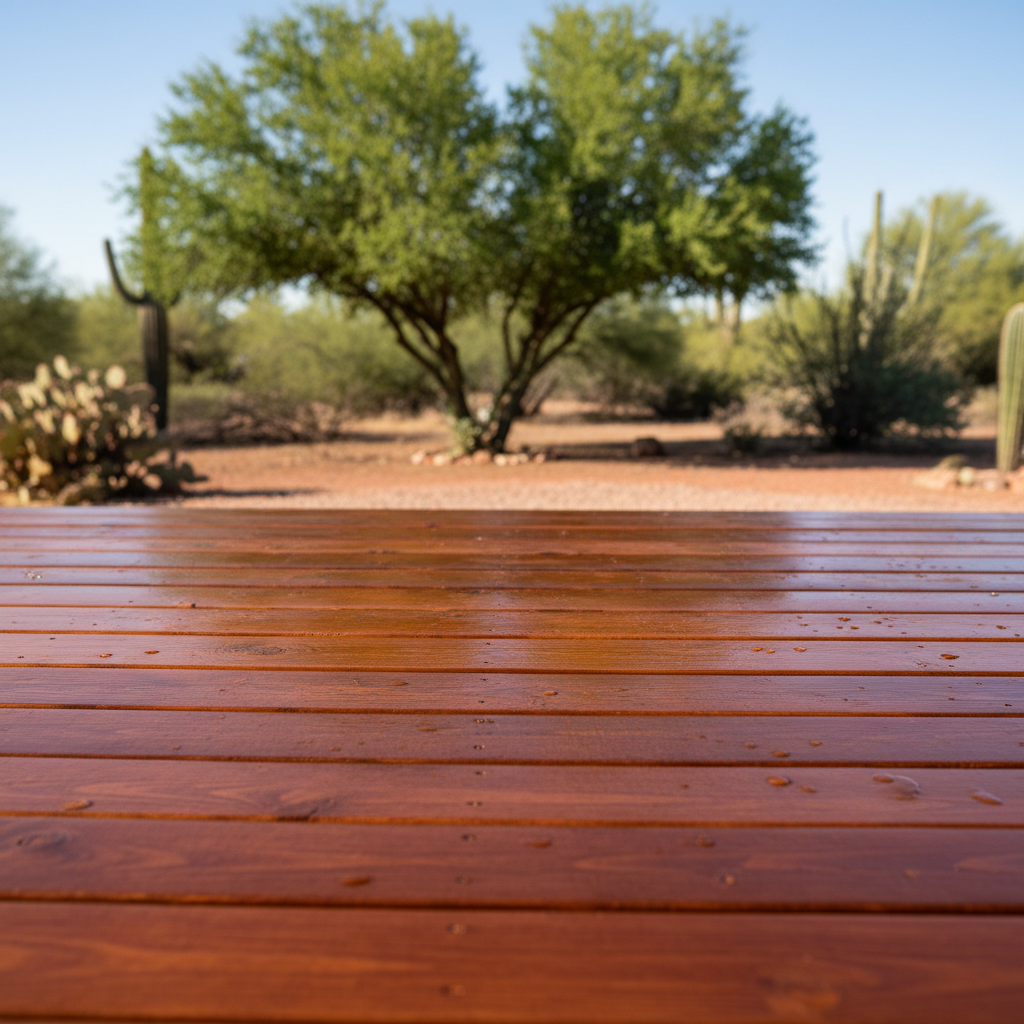
Alright, let's talk about keeping your deck looking sharp and protected here in Apache Junction. I get a lot of questions about painting versus staining, what products to use, and when to even bother. It's not just about curb appeal, you know; it's about protecting your investment from that relentless Arizona sun and our monsoon downpours. So, here are the straight answers to the questions I hear most often.
Should I paint or stain my deck? What's the real difference?
This is probably the most common question, and it's a big one. The main difference comes down to how they protect the wood and, well, how they look. Paint sits right on top of the wood, forming a thick, opaque film. It completely covers the wood grain, giving you a solid color. Think of it like a coat of armor for your deck. Stains, on the other hand, actually penetrate the wood fibers. They come in different opacities – clear, semi-transparent, semi-solid, and solid. Clear and semi-transparent stains let the natural wood grain show through, really enhancing its beauty. Semi-solid and solid stains offer more color but still let some of the wood's texture come through, unlike paint which just covers everything up.
For protection, paint generally offers a more robust, thicker barrier against UV rays and moisture. It's great for older decks where the wood might be a bit weathered or you want to hide imperfections. The downside? Paint can chip, peel, and crack, especially with our extreme temperature swings here in Apache Junction. When it fails, it usually means a lot of scraping and prep work to reapply. Stains, because they penetrate, tend to wear down more gradually. They might fade or thin out, but they're much less likely to peel dramatically. Reapplication is often easier – usually just a good cleaning and then another coat.
My honest take? For most wooden decks in our climate, I lean towards a good quality solid or semi-solid stain. It gives you color and protection, but it's more forgiving down the road when it's time for maintenance. Paint can be high-maintenance in the long run, believe me.
How often do I need to re-stain or repaint my deck in Apache Junction?
This isn't a one-size-fits-all answer, but I can give you a good rule of thumb for our area. That intense sun we get, especially out near the Superstition Mountains, is a killer for finishes. For stains, you're generally looking at needing to reapply every 1-3 years for semi-transparent or clear products, and 3-5 years for solid stains. Paint might last a bit longer, say 5-7 years, but when it starts to fail, it fails hard with peeling and cracking. The better the prep work and the higher quality the product, the longer it'll last, no doubt about it.
A good way to check if your deck needs attention is the water bead test. Sprinkle some water on the deck surface. If it beads up nicely, your finish is still doing its job. If it soaks right into the wood, it's time to get that deck protected again. Don't wait until the wood starts to gray or splinter; that's when you're doing damage control, not just regular maintenance.
What's the best type of stain or paint for our Apache Junction weather?
You need something that can stand up to extreme UV exposure and those big temperature swings. I always recommend exterior-grade products specifically designed for decks. Look for stains or paints that boast excellent UV resistance. Acrylic-based stains and paints tend to perform well in our climate because they're flexible and resist cracking better than oil-based products as the wood expands and contracts. Water-based acrylic-urethane blends are also fantastic; they offer good durability and are easier to clean up.
Avoid cheap, interior-grade products or anything not specifically labeled for decks. It's a false economy, really. You'll spend more time and money reapplying it than if you just bought the good stuff upfront. Brands like Sherwin-Williams, Benjamin Moore, and Behr all have excellent deck-specific lines. Talk to the pros at your local paint store; they know what holds up best around here.
Can I change from paint to stain, or vice versa?
Yep, you absolutely can, but it's a lot more work going from paint to stain. If your deck is currently painted and you want to switch to a stain, you've got to remove ALL the paint. And I mean all of it. That usually means power washing, scraping, sanding, and possibly using chemical strippers. If you don't get every speck of paint off, the stain won't penetrate properly, and you'll end up with a splotchy mess that won't last. It's a huge undertaking, but it gives you a whole new look.
Going from stain to paint is much easier. You'll still need to clean the deck thoroughly, make sure any loose stain is removed, and then prime it with a good exterior primer. The primer creates a uniform surface for the paint to adhere to. Always make sure the surface is clean, dry, and sound before applying anything new, no matter which direction you're going.
Do I need to clean and prep the deck before painting or staining?
You bet your bottom dollar you do. This is probably the most crucial step, and it's where most DIYers cut corners, leading to premature failure of the finish. You can't just slap a new coat over old dirt, mildew, or loose finish. Here's what I recommend:
- Clean it: Use a good quality deck cleaner. You can find these at any hardware store. Follow the directions, usually involving wetting the deck, applying the cleaner, letting it sit, and then scrubbing with a stiff brush.
- Rinse thoroughly: A power washer on a low setting (or a garden hose with a nozzle) is great for rinsing. Make sure all cleaner residue is gone.
- Brighten (optional but recommended): If your wood is looking gray or dull, a deck brightener will restore its natural color and open up the wood pores, helping the stain penetrate better.
- Sand (if needed): If you have any rough spots, splinters, or areas where the old finish is peeling, a light sanding will smooth things out and help the new finish adhere evenly.
- Dry completely: This is huge. The wood needs to be bone dry. In our dry climate, that usually means 24-48 hours of good sun, but check the moisture content if you have a meter. Applying finish to damp wood is a recipe for disaster.
Seriously, don't skip the prep. It's 80% of the job when it comes to a lasting finish. If you're not up for it, that's where Apache Junction Deck Builders can step in and handle the dirty work for you.
Can I paint or stain a brand new deck right away?
This is another common mistake I see. With new pressure-treated lumber, you generally need to let it 'weather' for a bit before applying any finish. Pressure-treated wood is full of moisture and chemicals from the treatment process. If you seal it too soon, that moisture can't escape, leading to bubbling, peeling, and poor adhesion of your finish. The general recommendation is to wait anywhere from 3 to 6 months, sometimes even a full year, depending on the wood and local conditions. The water bead test works here too – if water still beads on the new wood, it's not ready. If it soaks in, you're good to go.
For non-pressure-treated wood like cedar or redwood, you can usually stain it sooner, sometimes after just a few weeks, but it still benefits from a good cleaning and ensuring it's completely dry before application. Always check the manufacturer's recommendations for both the wood and the finish product you're using.
What about composite decks? Do they need painting or staining?
No, and that's one of the big advantages of composite decking. Products like Trex, TimberTech, or Fiberon are designed to be low-maintenance. They don't need painting, staining, or sealing to protect them from the elements or to maintain their color. That's why folks pay a premium for them, right? If you try to paint or stain a composite deck, you're likely to have adhesion problems, and it'll just peel and look terrible. The only maintenance they typically need is a good cleaning with soap and water or a specialized composite deck cleaner to remove dirt, pollen, and mildew. If you've got a composite deck, you've already bought yourself out of this whole painting and staining headache.
Any final tips for someone doing it themselves?
Yeah, I've got a few. First, always work in sections and follow the grain of the wood. Don't try to do too much at once, especially in our heat. Second, avoid applying finish in direct, blazing sun or when it's too hot. Early mornings or late afternoons are best. If the surface is too hot, the finish will dry too fast and won't penetrate or adhere properly. Third, use good quality brushes or rollers. Cheap tools give you cheap results, plain and simple. And finally, wear gloves and eye protection. These chemicals aren't good for your skin or eyes. If you're not comfortable tackling it, or just don't have the time, that's what we're here for at Apache Junction Deck Builders. We've got the experience to get it done right.