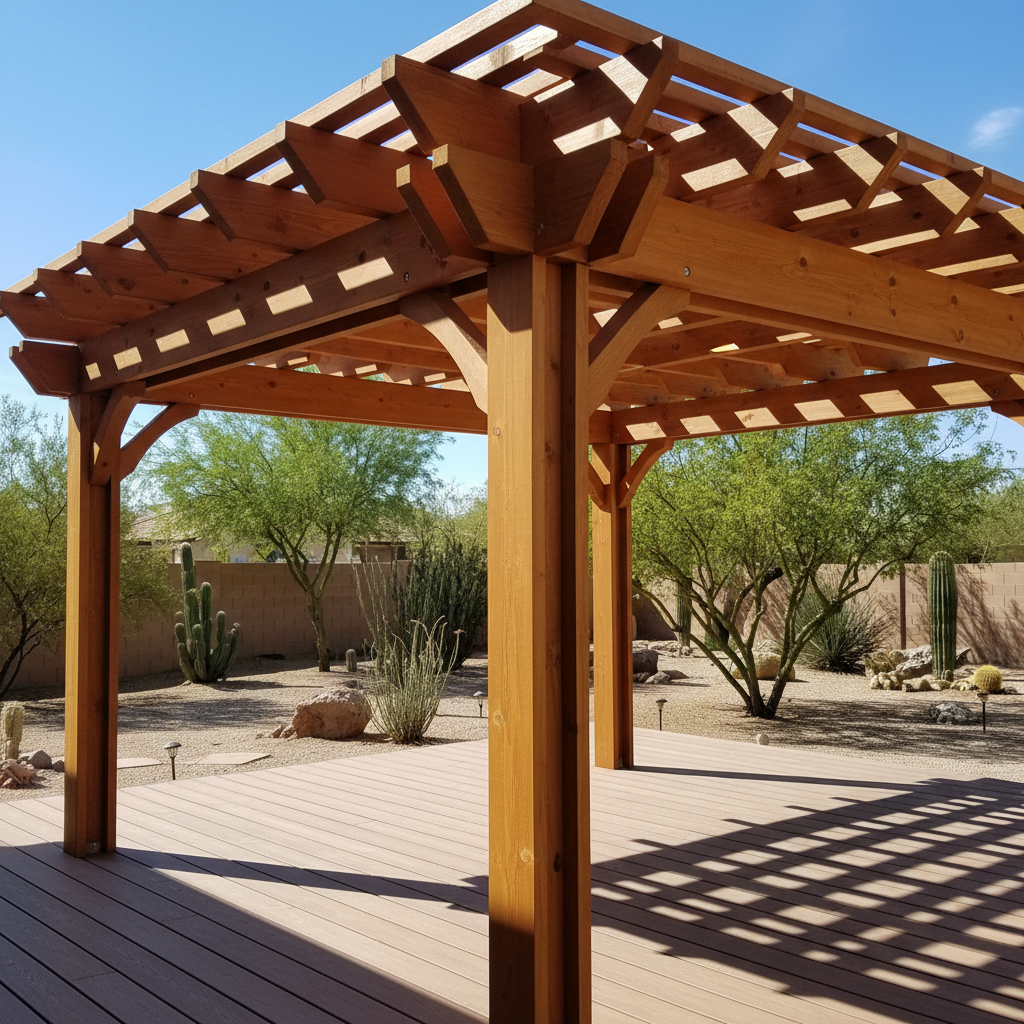
Alright, let's talk pergolas. I get a lot of questions about these, and for good reason. They can totally transform your backyard, giving you that much-needed shade and a real outdoor living space, especially with our Apache Junction sun beating down for most of the year. So, I figured I'd lay out some of the most common questions I hear and give you the straight scoop.
What's the real difference between a pergola and a gazebo?
This is probably the most common question I get. It's simple, really. A gazebo is a freestanding structure, typically octagonal or round, with a solid roof. Think of it like a little open-air building. You're fully covered from rain and sun. A pergola, on the other hand, usually has an open lattice or slat roof. It's designed to provide partial shade, often with climbing plants growing over it. It defines a space without fully enclosing it. You're not going to be completely dry under a pergola in a downpour, but you'll get a nice break from the sun.
Do I need a permit to build a pergola in Apache Junction?
You bet you do. Most outdoor structures, and yes, that includes pergolas, require a building permit from the City of Apache Junction. It's not just a suggestion; it's the law. They want to make sure it's built safely, meets zoning requirements, and won't cause any issues down the line. We handle all the permitting for our clients at Apache Junction Deck Builders, because honestly, navigating city hall can be a pain if you don't know the ropes. Trying to skip this step can lead to fines, having to tear it down, or problems when you try to sell your house later. Just don't do it.
What materials are best for a pergola in our Arizona climate?
This is critical for anything you build out here. You need materials that can stand up to intense UV rays, our dry heat, and the occasional monsoon. For wood, I usually recommend cedar or redwood. They naturally resist rot and insects, and they hold up well, especially if they're properly sealed and maintained. Pressure-treated lumber is another option, often more budget-friendly, but it needs good sealing too. Aluminum pergolas are also a solid choice. They're low maintenance, don't rot or warp, and come in various finishes. Vinyl is another option, super low maintenance, but sometimes people don't like the look as much. What you absolutely want to avoid is anything that's going to splinter, warp, or fade quickly under our sun. Cheap pine just won't cut it long-term.
How much shade will a pergola actually provide?
It depends entirely on the design. A traditional pergola with widely spaced rafters might only give you 40-50% shade. If you want more, you can add purlins (smaller cross-members) closer together, or even a shade cloth or retractable canopy on top. We've done a lot of designs where we angle the slats to block the sun during the hottest parts of the day. For example, if your pergola is facing west, you'll want denser coverage on that side to block the brutal afternoon sun. It's all about planning for the sun's path over your specific yard.
Can I attach a pergola to my house, or does it have to be freestanding?
You can absolutely do both. An attached pergola, often called a 'lean-to' pergola, uses your house as one of its support structures. This is a great option if you want to extend your living space directly off a patio door or kitchen. It can also be a bit more cost-effective since you're using fewer posts. A freestanding pergola, on the other hand, can be placed anywhere in your yard – over a fire pit, next to the pool, or even as a gateway. The choice really comes down to where you want the shade and how you envision using the space.
What about maintenance for a pergola in Apache Junction?
Maintenance depends on the material. A wooden pergola, especially in our dry climate, will need to be cleaned and re-sealed or stained every few years. This protects the wood from UV damage, keeps it from drying out and cracking, and helps prevent rot, though rot isn't as big an issue here as it is in wetter climates. Aluminum or vinyl pergolas are pretty much maintenance-free; just a hose-down now and then to get rid of dust. If you have climbing plants, you'll need to prune those regularly to keep them from getting too heavy or damaging the structure. It's not a huge chore, but it's something to factor in.
How long does a pergola construction project usually take?
Once we've got the permits in hand, a typical pergola project, depending on size and complexity, usually takes anywhere from a few days to a week. That's from digging the post holes to the final touches. The biggest variable is usually getting through the permitting process with the city, which can take a few weeks. That's why it's always best to plan ahead, especially if you want your pergola ready for a specific event or season. We always aim to get things done efficiently without cutting any corners, because a solid build is what matters most.