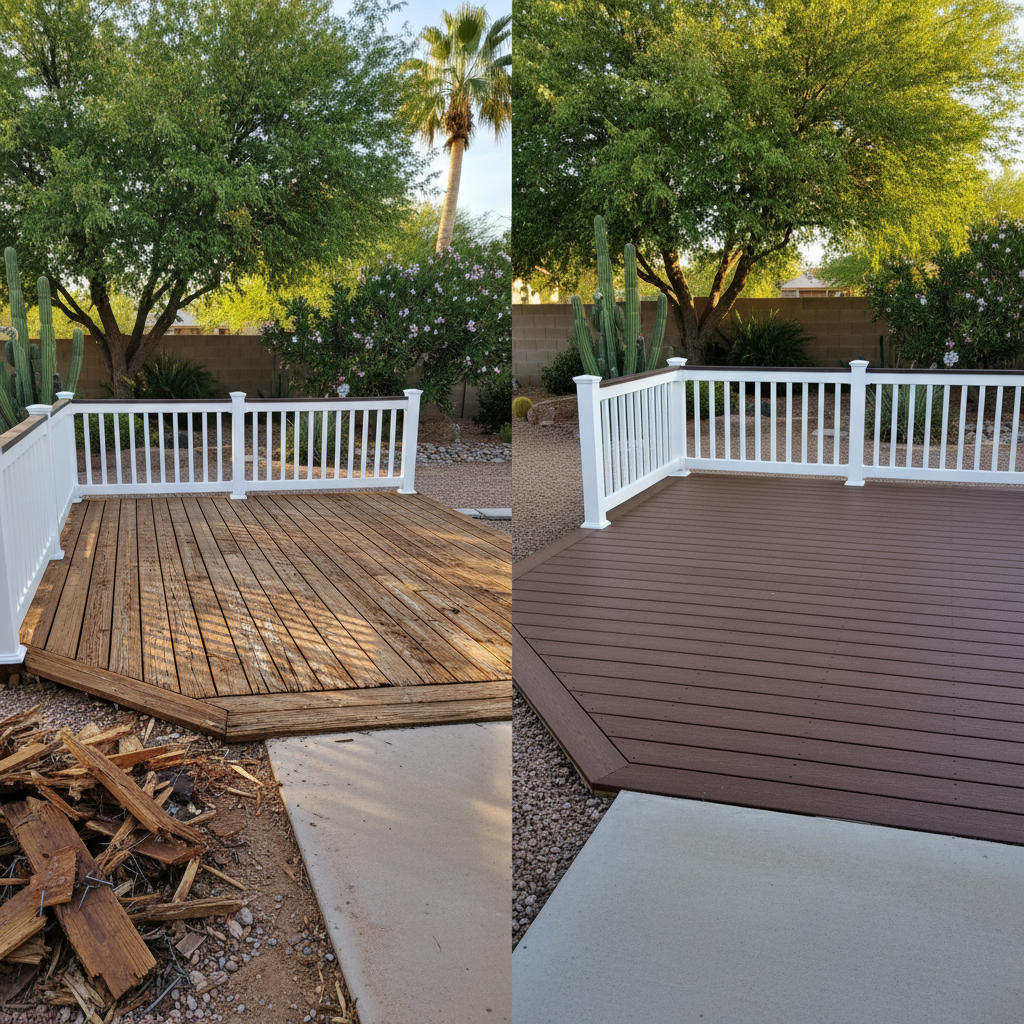
Alright, so you're thinking about a Trex deck. Smart move, especially out here in Apache Junction. You know, I'm a big fan of composite for our brutal sun and those monsoon downpours we get. But when you start looking into Trex, you'll probably hear about 'capped' and 'uncapped' boards. What's the real difference, and which one should you pick for your backyard?
Let's just get straight to it. This isn't some fancy marketing talk; it's what I've seen working with these materials day in and day out, right here in the desert.
What's the Difference?
Think of it this way: uncapped Trex is the original, the classic. It's a solid composite material, usually a mix of recycled wood fibers and plastic. It's built to last, way better than wood in many ways. But it's exposed on all sides, meaning the composite material itself is what you see and feel.
Capped Trex, on the other hand, is like the uncapped version but with an extra layer of armor. It's got that same composite core, but then it's wrapped in a high-performance, weather-resistant polymer shell. This cap covers at least three sides, sometimes all four, including the edges. It's a newer technology, designed to make composite decking even better.
Cost: Where Your Money Goes
No surprise here: capped Trex will cost you more upfront. That extra layer of protection, that advanced technology — it all adds to the price tag per linear foot. Uncapped Trex is the more budget-friendly option if you're trying to keep the initial investment down.
Now, I know everyone has a budget. But sometimes, spending a little more now saves you a lot later, doesn't it? Keep that in mind as we talk about the other factors.
Durability: Fighting the Apache Junction Elements
This is where capped Trex really shines, especially for us. Our sun, man, it's no joke. Those UV rays beat down relentlessly. Uncapped Trex, while tough, can still show some signs of weathering over time. We're talking fading, maybe some minor staining if you spill something greasy and don't clean it up fast. It's still a strong material, but it's not invincible.
Capped Trex? That polymer shell makes a huge difference for durability. It's built to resist fading from the sun, scratching, and staining much better. You spill a margarita or drop a hot dog, it won't soak in as easily. That cap acts as a barrier. For a deck that's going to sit out in 110-degree summers and get blasted by dust storms, that extra protection is huge.
Maintenance: Less Work, More Relaxing
You want a deck so you can relax on it, not spend every weekend cleaning it, right? Both types of Trex are low-maintenance compared to wood – no sanding, staining, or sealing. That's a given.
But capped Trex takes "low maintenance" to another level. Because of that protective shell, it's much easier to clean. A little soap and water, maybe a soft brush, and you're good to go. Stains don't penetrate as easily, so they wipe right off. Uncapped Trex might need a bit more effort to scrub out a stubborn stain, or you might see some dust and dirt embed over time, especially with our fine desert soil.
Appearance: Looks That Last
When you first install either type, they both look fantastic. Trex has come a long way in making composites look natural, with realistic wood grain patterns and a variety of colors. But how do they look after five, ten, fifteen years under our Apache Junction sun?
Uncapped Trex can fade. It's not usually a drastic change, but the color will mellow out. If you're particular about keeping that "just installed" look, you might be disappointed. Capped Trex, with its UV-resistant shell, holds its color much better. It's designed to resist fading, keeping that vibrant look longer. Plus, the cap often allows for more intricate, multi-tonal streaking and wood grain effects that look incredibly realistic.
My Recommendation for Apache Junction Homeowners
Look, if you're on a super tight budget and just need something better than wood, uncapped Trex will serve you well. It's a solid product, and it's definitely an upgrade in terms of maintenance over a traditional wood deck.
But if you ask me, and you're building a deck that you want to look great and perform flawlessly for decades in our specific climate – with all the sun, heat, and occasional dust and rain we get out here near the Superstition Mountains – you really can't beat capped Trex. The extra upfront cost is an investment in longevity, lower maintenance, and a deck that will keep its good looks for years to come. It resists fading, scratching, and staining so much better, which means less work for you and more time enjoying your outdoor space.
We've installed plenty of both for folks around here, and the feedback on capped products is always stellar. For a long-term, worry-free deck, that's the way I'd go. If you're ready to talk specifics for your place, give Apache Junction Deck Builders a call. We're happy to walk you through the options and get you a quote.