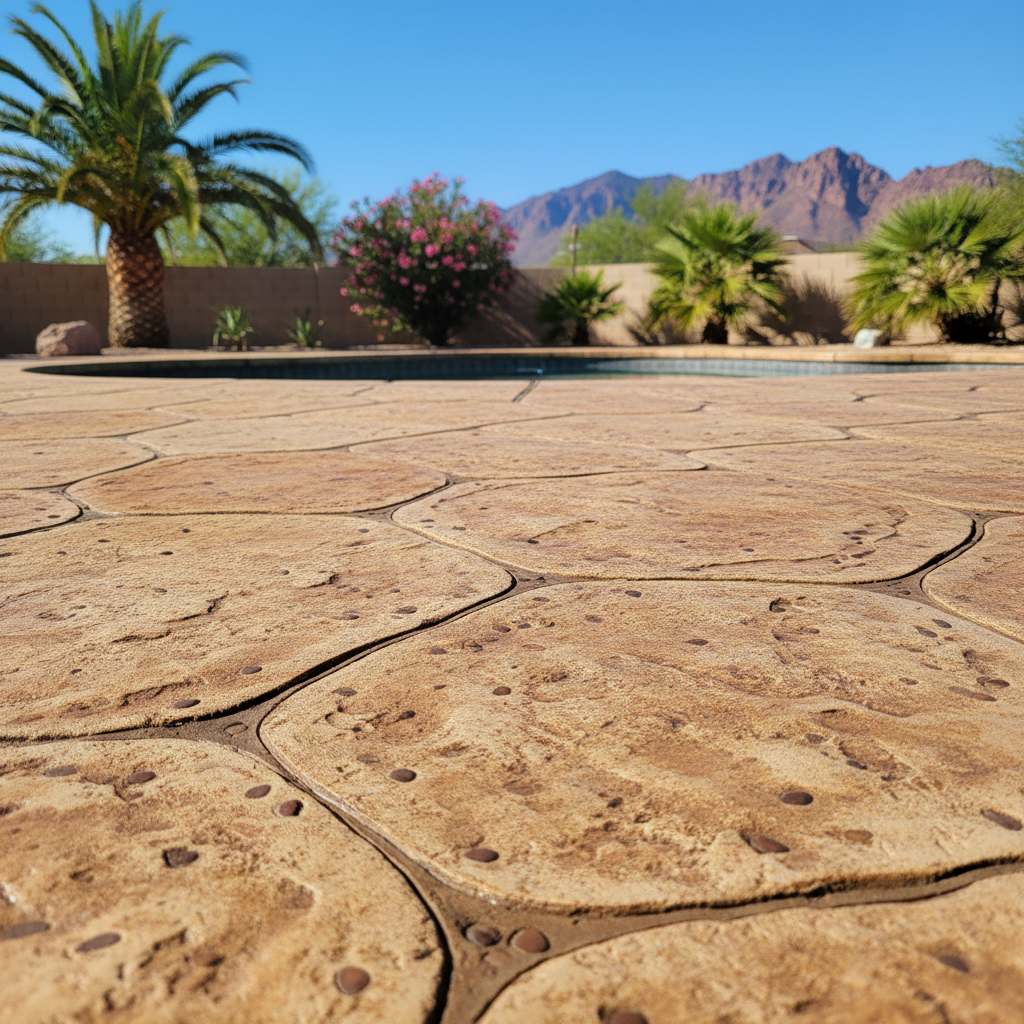
Alright, homeowners. You've got a pool, and that means you've got a pool deck. Here in Apache Junction, that deck takes a real beating from the sun, the monsoons, and everything else our unique climate throws at it. I hear a lot of the same questions about pool decks, so I figured it's time to just lay it all out for you. No nonsense, just the facts. Let's dive in, shall we?
What's the best material for a pool deck in Arizona's heat?
This is probably the most common question I get. You want something that won't fry your feet, right? The truth is, there's no single 'best' material, but some choices definitely work better for our Arizona heat than others.
- Travertine: People love this stuff, and for good reason. It stays pretty cool underfoot, even when it's 115°F outside. That's because it reflects heat instead of soaking it up. Plus, it's naturally slip-resistant and holds up well to pool chemicals and heavy use. You will need to seal it every year or two, though, to keep it looking sharp and prevent stains.
- Limestone: If keeping things as cool as possible is your absolute top priority, limestone can actually be even cooler than travertine. It absorbs heat, sure, but then it dissipates it quicker. It also has a more uniform look, which some folks prefer for a modern vibe. Just like travertine, regular sealing is a must.
- Cool Deck (Acrylic-Cement Coating): When folks say "cool deck," they're usually talking about an acrylic-cement coating that goes right over concrete. It's been the standard here for decades because it can stay 20-30°F cooler than plain concrete. It's usually the most affordable option, too.
- Concrete Pavers: These give you a lot of design freedom and can last a really long time—often 30 years or more. Lighter colored pavers will be cooler than darker ones, of course, but generally, concrete pavers will still get hotter than travertine.
What you pick really comes down to your budget, how much maintenance you're willing to do, and the look you're going for. Just remember, dark colors are a definite no-go around a pool here; they'll hit 160°F+ surface temps in the low desert, easy.
How much does a new pool deck cost in Apache Junction?
Costs vary a lot, just like with anything else, right? It depends on the material, the size of your deck, and how much prep work is needed. For a basic concrete deck, you might be looking at $8-$18 per square foot. Stamped concrete can run from $12-$25 per square foot. If you're leaning towards pavers, expect $16-$30 per square foot, and natural stone like travertine can be $20-$45 per square foot. These are just averages, mind you. A standard pool deck in Arizona usually falls between 400 and 1,000 square feet.
Don't forget to factor in things like excavation, base prep, and any special finishes or add-ons like drainage systems or slip-resistant coatings. Labor and permits are part of that total, too.
Do I need a permit for a pool deck in Apache Junction?
This is important, so pay attention. If you're just doing a basic open deck that's less than 30 inches above the finished grade, you might not need a building permit from the city. However, you'll still want to check with the Planning Department for any requirements. If your deck is over 30 inches above grade, or if you plan to enclose it or put a roof over it, then yes, you absolutely need a building permit. The City of Apache Junction builds to the 2018 International Residential Code, among others, which includes the 2018 International Swimming Pool and Spa Code.
For the pool itself, you'll definitely need a pool permit. That covers the building of the pool and all the related electrical and plumbing work. They'll want construction plans and a plot plan showing the pool's location and setbacks. And remember, any pool needs a safety barrier that meets city ordinances.
How do I keep my pool deck from getting too hot?
Besides choosing a naturally cooler material like travertine or limestone, or an acrylic cool deck coating, color makes a huge difference. Lighter colors reflect more sunlight and absorb less heat. Darker colors, especially on concrete, can get dangerously hot—sometimes over 150°F. You can also consider adding shade structures like pergolas or shade sails over parts of your deck. Even a well-placed umbrella can help a lot with direct sun exposure during those brutal summer afternoons.
What about drainage? My deck gets puddles after a monsoon.
Puddles are a problem, not just for safety (slip hazards, anyone?) but also for the longevity of your deck. Proper drainage is crucial. We often see issues with expansive soils here in Apache Junction, which can cause cracking and uneven surfaces if not accounted for. Your deck should be sloped slightly away from the pool and your house to direct water to appropriate drainage points. Sometimes, that means installing channel drains, French drains, or trench drains to collect and redirect the water away. If you're seeing standing water, it's a clear sign you need to address your drainage system.
How often should I clean and maintain my pool deck?
Our desert environment is tough on everything, and your pool deck is no exception. Between the intense UV rays, the dust from haboobs, and hard water splashing out of the pool, your deck needs regular attention. I'd recommend at least weekly skimming and brushing of the pool itself, and that includes brushing the waterline and areas where debris collects. For the deck surface, regular sweeping to remove dirt and debris is a good start. Then, a good scrub with a mild cleaner and a rinse, especially after a dust storm, will keep it from getting a baked-on film. If you have a concrete deck, you'll want to seal it regularly, usually every year or two, with a product designed specifically for pool decks. This protects it from chemicals and deterioration. Catching problems early, like small cracks or stains, will save you a headache down the road.
My pool deck is cracked and faded. Can it be resurfaced, or do I need a whole new one?
It depends on how bad the damage is. For many decks, especially concrete ones, resurfacing is a great option. It can really improve the appearance, add slip resistance, and even reduce surface temperatures. A good contractor will repair any cracks before applying a new coating. However, if you have severe structural damage, you might be looking at a more extensive repair or even a full replacement. When you're considering resurfacing, make sure the contractor uses coatings designed for our extreme Arizona climate – they need to be UV stable, heat-reflective, and able to handle thermal expansion. We at Apache Junction Deck Builders can help you figure out the best path forward for your specific situation.